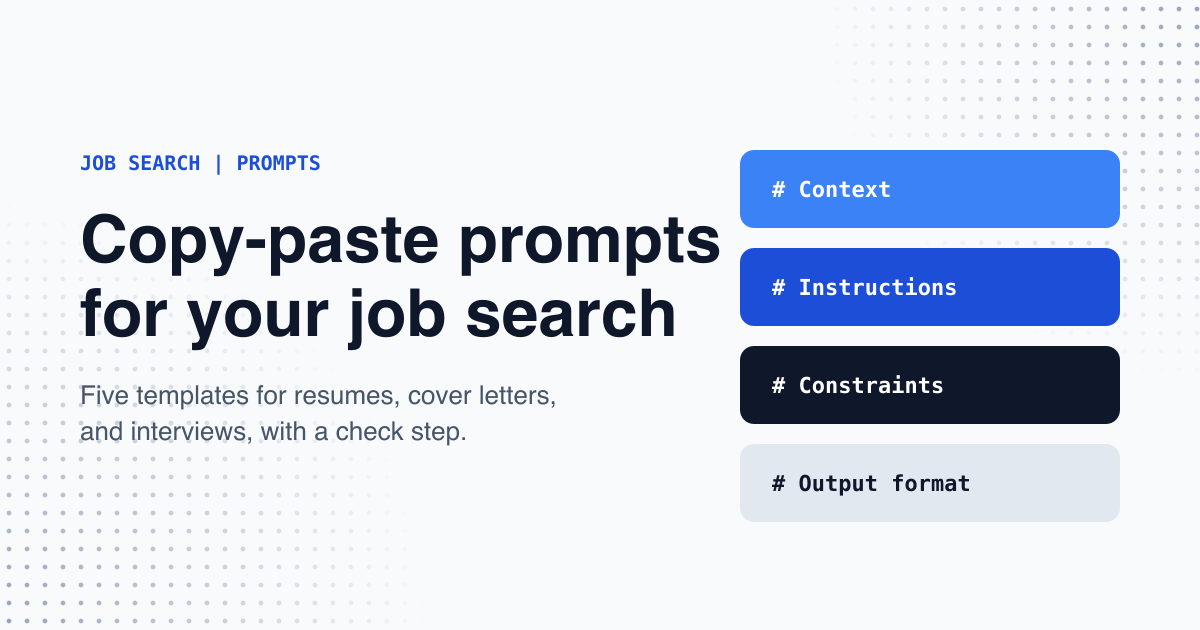
अपनी नौकरी की तलाश के लिए कॉपी करने योग्य पाँच टेम्पलेट
हर टेम्पलेट एक काम संभालता है। वर्ग कोष्ठकों में जो कुछ है उसे अपनी जानकारी से बदलें, फिर पूरा ब्लॉक अपनी AI चैट में पेस्ट करें। Constraints वाली पंक्तियाँ रखें। वे भाषा मॉडल को अनुभव गढ़ने से रोकती हैं, जो नौकरी के आवेदन में गंभीर समस्या होगी। अगर कोई सेक्शन खाली है, तो टेम्पलेट भाषा मॉडल को अनुमान लगाने के बजाय रुककर आपसे पूछने को कहता है।
1. जॉब पोस्टिंग समझें
आवेदन से पहले इसका उपयोग करें। यह नियोक्ता जो माँगता है उसे क्रमबद्ध करता है और दिखाता है कि आपकी पृष्ठभूमि कहाँ पतली है, ताकि आप जानें कि क्या तैयार करना है।
# Context
I am applying for [job title] at [company]. If the company name is unknown, write "Company name unknown" and do not invent one. My background: [two or three lines about your experience].

# Instructions
Read the job description below. Sort the requirements into three lists: must-have, nice-to-have, and things to ask about in an interview. For each must-have, say whether my background shows it, and quote the line from my background that shows it. If it does not, say so.

# Constraints
Do not assume I have a skill I did not list. Keep each list to ten items or fewer. If the job description is unclear on something, say what is unclear. If a pasted section is empty, stop and ask me for it before you answer.

# Output format
Three bulleted lists with the headings Must-have, Nice-to-have, and Ask in the interview. Then a table with the columns Requirement | My evidence | Gap.

# Job description
[paste the full job description here]
2. अपना रेज़्यूमे ढालें
हर आवेदन के लिए इसका उपयोग करें। यह आपका सारांश और हाल का अनुभव, या अगर आपके पास कोई वेतनभोगी काम नहीं है तो प्रोजेक्ट, जॉब से मेल खाने के लिए दोबारा लिखता है। यह वे आवश्यकताएँ भी सूचीबद्ध करता है जो आपके रेज़्यूमे में नहीं हैं, ताकि आप वह दावा न करें जिसे साबित नहीं कर सकते।
# Context
I want to apply for [job title] at [company]. If the company name is unknown, write "Company name unknown" and do not invent one. My resume is below, followed by the job description.

# Instructions
Rewrite my summary, and the bullet points under my most recent work experience, so they match the job description. If I have no paid work experience, use my projects and education instead. Keep my wording close to the original. Put the most relevant points first.

# Constraints
Use only facts from my resume. Do not invent experience, tools, numbers, job titles, or dates. Do not present a project as a job. If a requirement has no matching evidence, do not add it; list it at the end under "Not in my resume". Keep the summary to three sentences. If a pasted section is empty, stop and ask me for it before you answer.

# Output format
1. Revised summary
2. Revised bullets for each recent role or project
3. "Not in my resume" list

# Resume
[paste your resume here]

# Job description
[paste the job description here]
3. कवर लेटर लिखें
पत्र का मसौदा बनाने के लिए इसका उपयोग करें। परिणाम को पहला मसौदा मानें, और उसे संपादित करें ताकि वह आप जैसा लगे।
# Context
I am applying for [job title] at [company]. If the company name is unknown, write "Company name unknown" and do not invent one. The hiring manager is [name, or "not known"]. I want the letter to sound [one or two words, for example: warm and direct].

# Instructions
Write a cover letter of about 250 words. Open with the main reason I fit this role. Connect two or three examples from my resume to the job's most important requirements. End with a short, polite request for an interview.

# Constraints
Use only facts from my resume and the job description. Do not invent achievements or claims about the company. Do not open with "I am writing to apply". Use plain English. If a pasted section is empty, stop and ask me for it before you answer.

# Output format
Three or four short paragraphs with no headings. Then one line that lists only the employer facts stated in the job description. If the company name is not in the job description, write: Company name not in job description.

# Resume
[paste your resume here]

# Job description
[paste the job description here]
4. इंटर्व्यू का अभ्यास करें
इंटर्व्यू से एक हफ़्ते पहले इसका उपयोग करें। असिस्टेंट इंटर्व्यूअर की भूमिका निभाता है, एक समय में एक सवाल पूछता है, और हर जवाब के बाद फीडबैक देता है।
# Context
I am preparing for an interview for [job title] at [company]. The job description and a short summary of my experience are below. This is a chat: I will reply after each question, for five questions in total.

# Instructions
Act as the interviewer. Ask the first question now. After I reply, give feedback and ask the next question, and wait for my answer each time. Ask two questions about my experience, two about situations I may have faced, and one about why I want this role. If my summary shows no paid jobs, ask about my projects, coursework, or volunteer work instead of workplace situations. After each answer, give feedback in three parts: what worked, what was unclear, and a stronger version of my answer in my own words.

# Constraints
Choose questions only from the job description and my summary. Keep feedback to five sentences per answer. Do not make up details about my background. If a pasted section is empty, stop and ask me for it before you answer.

# Output format
Only the next question and, after my answer, its feedback. After my sixth answer, give a clarity score from 1 to 5 and the two things I should practise most.

# Job description and my summary
[paste the job description and your summary here]
5. धन्यवाद ईमेल लिखें
इंटर्व्यू के एक दिन के भीतर इसका उपयोग करें। यह ईमेल छोटा रखता है और उस बात का ज़िक्र करता है जिस पर आपने वास्तव में चर्चा की।
# Context
I interviewed for [job title] at [company] on [date] with [interviewer's name and role]. We talked about: [two or three topics from the interview].

# Instructions
Write a short thank-you email from me to the interviewer. Mention one specific topic from our conversation, and say that I am still interested in the role.

# Constraints
Under 120 words. Friendly and professional. Do not mention salary. Use only the topics I listed, and do not invent details about the conversation. If the date, the interviewer, or the topics are missing, say you cannot draft the email yet, and list what I need from my notes. If any field still shows square brackets, treat it as missing.

# Output format
A subject line, then the email body. Then one alternative subject line.
कुछ भेजने से पहले परिणाम जाँचें
- हर नाम, तारीख, जॉब शीर्षक और संख्या अपने रिकॉर्ड से मिलाएँ। तथ्यात्मक परिणाम के लिए OpenAI की गाइड सुझाव देती है कि भाषा मॉडल से आपकी दी हुई सामग्री से उद्धरण माँगें, और जो अनिश्चित हो उसे लेबल करें।
- प्रॉम्प्ट के अंत में गुणवत्ता चेकलिस्ट जोड़ें, जैसे: सुनिश्चित करें कि परिणाम में X शामिल हो, Y से बचें। OpenAI की गाइड सटीकता के लिए इसकी सिफारिश करती है।
- भरोसा करने से पहले टेम्पलेट का परीक्षण करें। OpenAI पाँच से दस सवालों का छोटा मूल्यांकन सुझाता है जिनके जवाब आप पहले से जानते हैं। नौकरी की तलाश के लिए, किसी ऐसी जॉब पर एक टेम्पलेट आज़माएँ जिसके लिए आप पहले ही आवेदन कर चुके हैं, और परिणाम की तुलना उससे करें जो आपने भेजा था।
- टेम्पलेट को ऐसे दोस्त को दिखाएँ जिसे संदर्भ की जानकारी न हो। Anthropic की गाइड एक सुनहरा नियम देती है: अगर न्यूनतम संदर्भ वाला सहकर्मी प्रॉम्प्ट से भ्रमित हो, तो भाषा मॉडल भी भ्रमित होगा।
- अगर पहला परिणाम ठीक न लगे, तो जो कमी रही उसके आधार पर प्रॉम्प्ट बदलें: संदर्भ की कमी, अस्पष्ट फ़ॉर्मेट, अस्पष्ट दर्शक, या एक प्रॉम्प्ट में बहुत सारी माँगें।
- किसी भी AI tool में रेज़्यूमे पेस्ट करने से पहले फ़ोन नंबर और घर का पता जैसे व्यक्तिगत विवरण हटा दें।